
Who Needs a 10,000-Person Email List? Here’s the Skeptic’s Truth About Profit vs. Vanity Metrics

If you’ve spent more than five minutes in the digital marketing world, you’ve heard the mantra: "The money is in the list." Usually, that’s followed by some expert flashing a screenshot of a 50,000-person email list like it’s a golden ticket to early retirement.
But here’s the truth they won't tell you at the shiny marketing seminars: A massive email list is often nothing more than a giant, expensive ego stroke.
You don't need 10,000 subscribers to build a thriving business. In fact, if those 10,000 people aren't opening your emails, clicking your links, or buying your products, that list isn't an asset, it’s a liability. It’s a "ghost list" that’s actively draining your bank account and tanking your deliverability.
Today, we're cutting through the hype. We’re going to talk about why a smaller, lean list is outperforming the giants, how to apply the "ROI Filter" to your marketing, and why you should probably delete half your subscribers today.
The Vanity Metric Trap: Why Big Lists Can Be Bad Business
In the same way that "gross revenue" is a vanity metric compared to "net profit," your total subscriber count is a vanity metric compared to your active engagement.
Think about it. Most Email Service Providers (ESPs) charge you based on the number of contacts you store. If you have 10,000 subscribers but only 1,000 of them are actually reading your stuff, you are literally paying a "ghost tax" on the other 9,000 people. You’re subsidizing people who don’t care about you.

But the costs aren't just financial. There’s a hidden technical cost called sender reputation.
When you blast 10,000 emails and 8,000 of them go unopened, Google and Outlook take notice. They see that your "engagement" is trash, and they start filtering your emails into the "Promotions" tab or, worse, the Spam folder. Suddenly, even your most loyal fans aren't seeing your updates because the "ghosts" on your list have poisoned the well.
This is where the Newsletter Shake Up comes into play, it's about reinventing how you view the inbox as a direct line of communication, not a broadcast tower.
The ROI Filter: A Better Way to Measure Success
So, if list size is a lie, what should you be looking at? We call it the ROI FILTER.
Instead of chasing a "K" after your subscriber number, focus on these three metrics that actually move the needle:
- The Reply Rate: This is the ultimate signal of a healthy list. When someone hits "reply" to your email, it tells the ESPs that you are a real person having a real conversation. It’s worth 100x more than a simple "open."
- The Earnings Per Subscriber (EPS): If you have 1,000 people and you made $2,000 this month, your EPS is $2. If you have 10,000 people and you made $2,000, your EPS is $0.20. Which business would you rather own?
- The 60-Day Activity Window: Who has actually interacted with you in the last two months? These are your only real subscribers. Everyone else is just a data point in a database.
If you’re still trying to figure out how to bridge the gap between "having a list" and "making a living," you might find some inspiration in how one entrepreneur hit $1,000 online by focusing on what worked instead of what looked good on paper.
PLUS: The Skeptic’s Guide to "Pruning" Your List
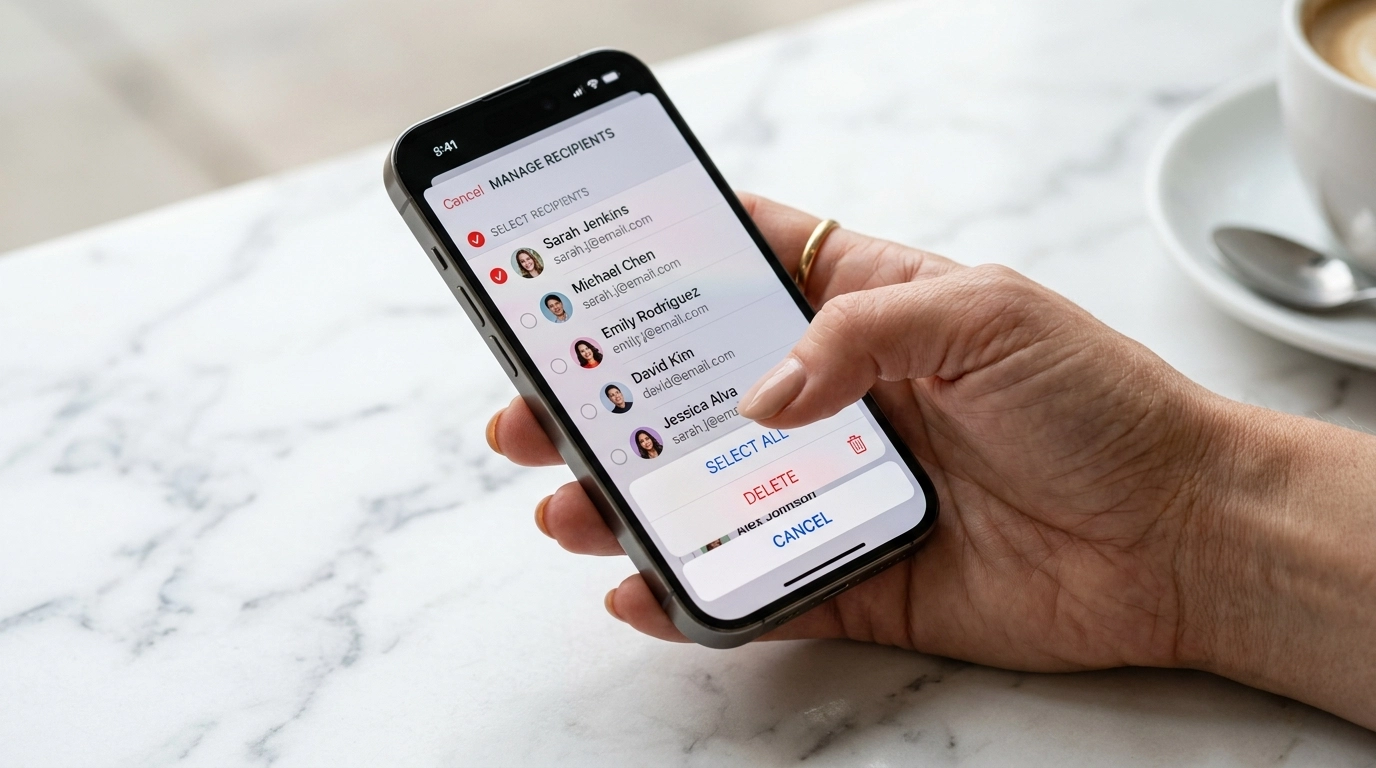
If you want to dodge the "ghost tax" and level up your results, you need to get comfortable with the "Delete" button. It feels counter-intuitive to throw away names you worked hard to get, but it’s the fastest way to increase your profit margin.
GOAL: Remove the weight so the ship can move faster.
Here is the step-by-step framework for cleaning your list for maximum ROI:
Step 1: Define Your "Sunset Policy"
A sunset policy is a set of rules for when someone is officially "dead" to your list. For most small business owners, we recommend a 90-day window. If they haven't opened or clicked anything in 90 days, they are moved to a "Re-engagement" segment.
Step 2: The Last-Ditch Effort
Before you delete them, send one, and only one, email with a subject line like: "Are we breaking up?" or "Should I stop emailing you?" Be direct. Ask them if they still want to be there. If they click "Yes," they stay. If they don't respond within 48 hours, they’re gone.
Step 3: The Purge
Hit delete. Don't archive them. Don't "save them for later." Delete them from your ESP so you stop paying for them.
PRO TIP: Watch what happens to your open rates on the next email you send. They will skyrocket. Your deliverability will improve, and your active fans will actually start seeing your content again. If you want to take it a step further and get even more clicks from the people who do stay, try switching from standard copy to video emails.
Quality List Building: How to Attract Buyers, Not Just "Bystanders"
Once you’ve cleaned the house, you need to make sure you aren't just filling it back up with more ghosts. Most people make the mistake of creating "wide" lead magnets that attract everyone but interest no one.
If you offer a generic "10 Tips for Success" PDF, you’ll get a lot of subscribers, but they’ll be low-quality. They’re just there for the freebie.
Instead, you should be debating the merits of Free Lead Magnets vs. $7 Offers. A $7 offer is the ultimate ROI filter. It separates the "lookie-loos" from the actual customers. A list of 500 people who have actually opened their wallets for you is infinitely more valuable than a list of 5,000 who just want free stuff.

Stop Chasing Vanity, Start Chasing Connection
At the end of the day, marketing is about one thing: moving someone from where they are to where they want to be. You don't need a stadium full of people to do that. You just need a room full of the right people.
The next time you see someone bragging about their 10,000-person list, ask yourself: How many of those people are actually listening?
Better yet, look at your own metrics. Apply the ROI Filter. Clean out the "ghosts." Focus on the people who reply, the people who engage, and the people who buy.
Your bank account: and your sanity: will thank you.

Ready to stop playing the "numbers game" and start playing the "profit game"?
Start by auditing your latest campaign. Look past the open rate and find your reply rate. That’s where your real business lives. If you need a hand figuring out which tactics actually move the needle in today's skeptical market, keep an eye on our latest case studies right here at Jonathan Jenkins Online.